Stories

One photograph can hold an entire world.

Explore the original long-form stories and the source-backed film notes from our published documentaries.

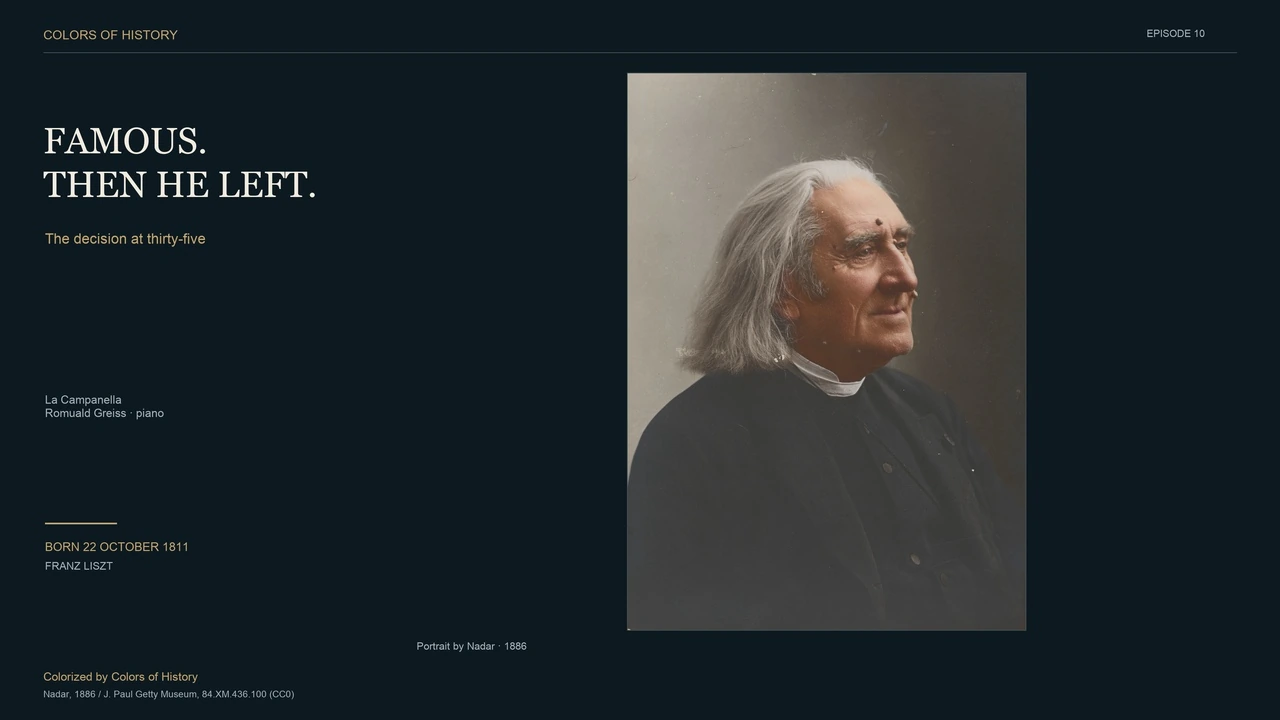
Episode cover: Why Franz Liszt Stopped Touring at 35
Film story · Episode 10

Why Franz Liszt Stopped Touring at 35

Liszt became an international star before recorded music. In 1847, at thirty-five, he left professional touring for a different musical life in composing and teaching. He did not stop playing.

Colorized by Colors of History

Sources and image credits

Photographs: Franz Hanfstaengl, 1858 / Wikimedia Commons; photographer unknown, 1885 / University of Trier via Wikimedia Commons; Nadar, 1886 / J. Paul Getty Museum, 84.XM.436.100, CC0. Film music: Liszt’s La Campanella, Romuald Greiss, piano, recorded 2000; performer’s public-domain release, excerpted, faded and mixed.

The episode cover is an editorial color interpretation; the original photograph is the historical evidence.
Watch and explore the sources →

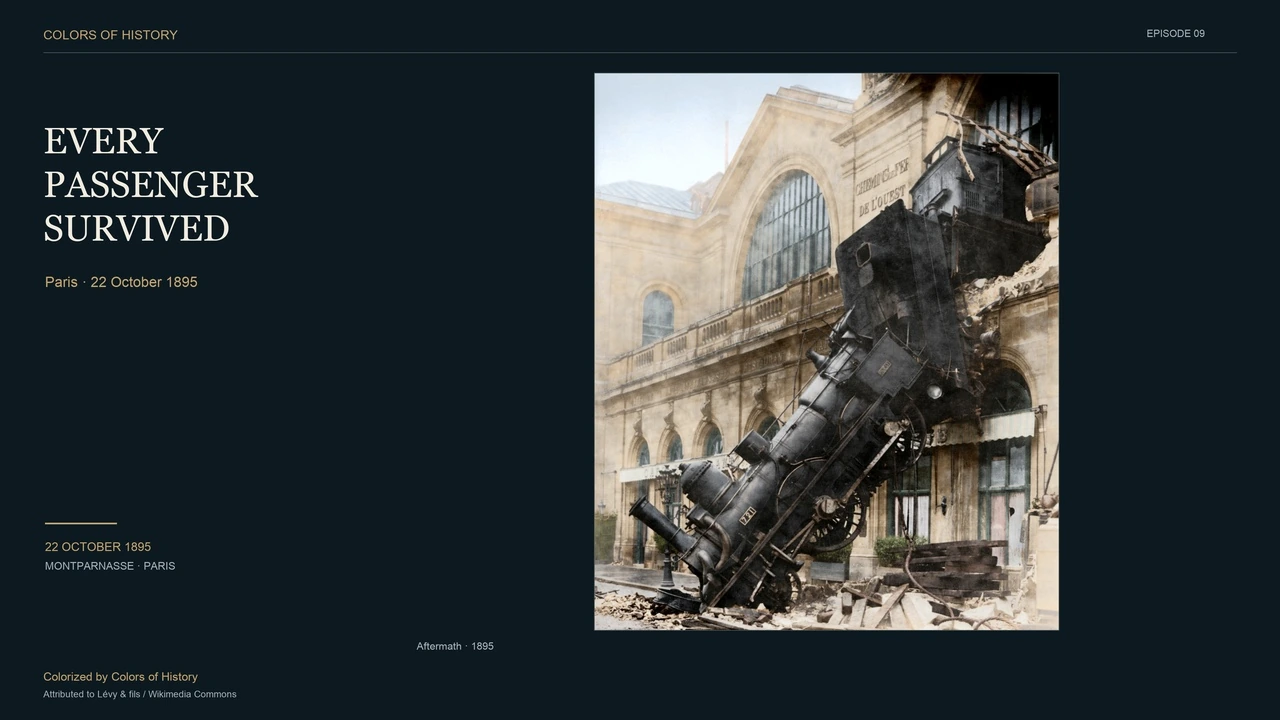
Episode cover: The Train That Fell Into Paris
Film story · Episode 9

The Train That Fell Into Paris

Every passenger survived the Montparnasse crash of 1895. The only person killed was selling newspapers outside the station. This story follows the arrival that would not stop and the human life beyond the famous photograph.

Colorized by Colors of History

Sources and image credits

Historical photographs: attributed to Lévy & fils, photographer uncertain, and photographer unknown / Wikimedia Commons. Attribution uncertainty is preserved; color interpretations are not original color records.

The episode cover is an editorial color interpretation; the original photograph is the historical evidence.
Watch and explore the sources →

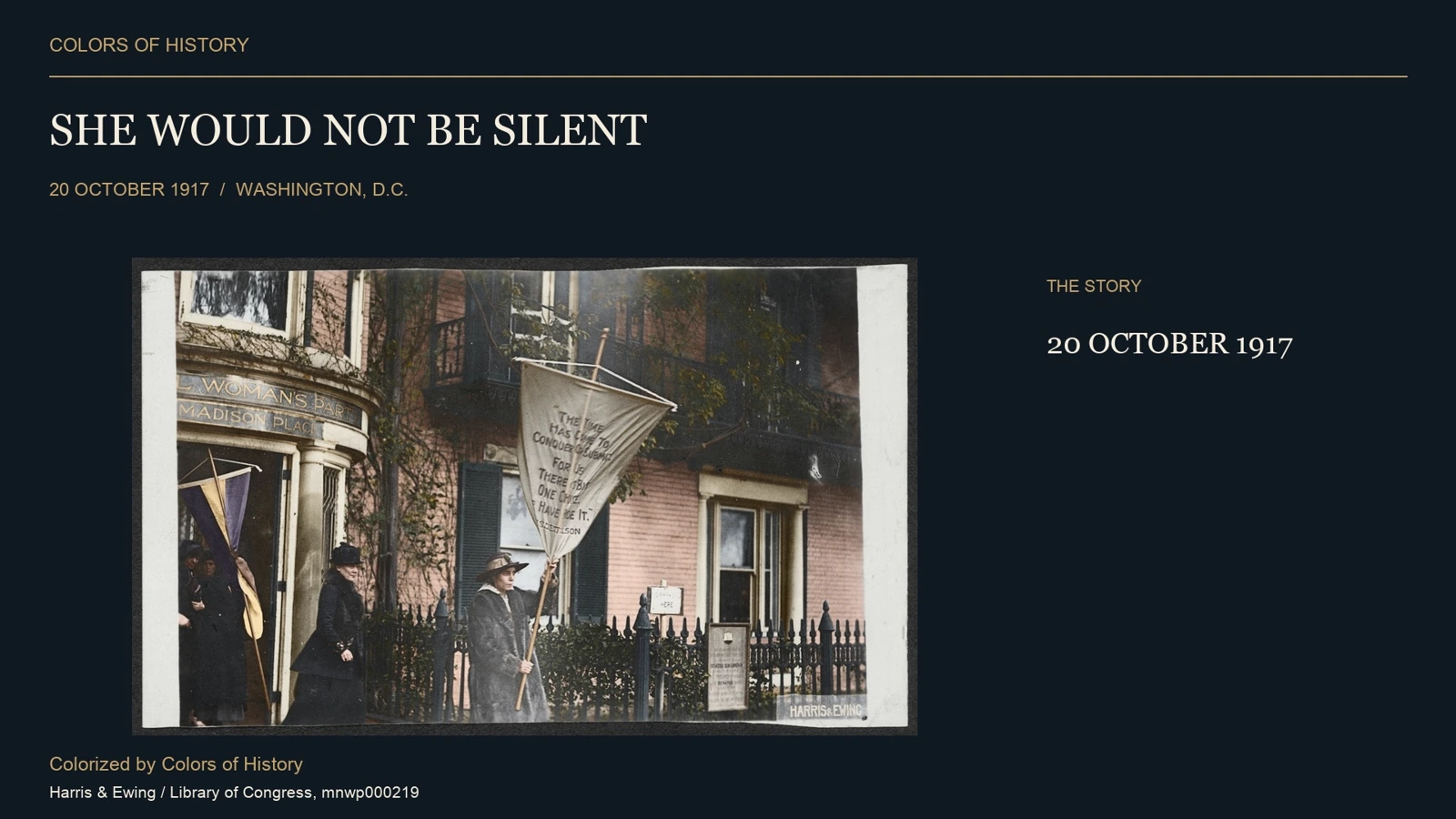
Episode cover: Alice Paul: The Women Who Would Not Be Silent
Film story · Episode 8

Alice Paul: The Women Who Would Not Be Silent

A Harris & Ewing photograph of a National Woman’s Party picket line opens a story of protest, imprisonment and the struggle for women’s suffrage. The film also recognizes that the Nineteenth Amendment did not end racial exclusion from voting.

Colorized by Colors of History

Sources and image credits

Original photograph: Harris & Ewing / Library of Congress, Women of Protest collection, mnwp000219, catalog date [October 20, 1917]. Collection rights statement applies; no blanket permission grant is claimed.

The episode cover is an editorial color interpretation; the original photograph is the historical evidence.
Watch and explore the sources →

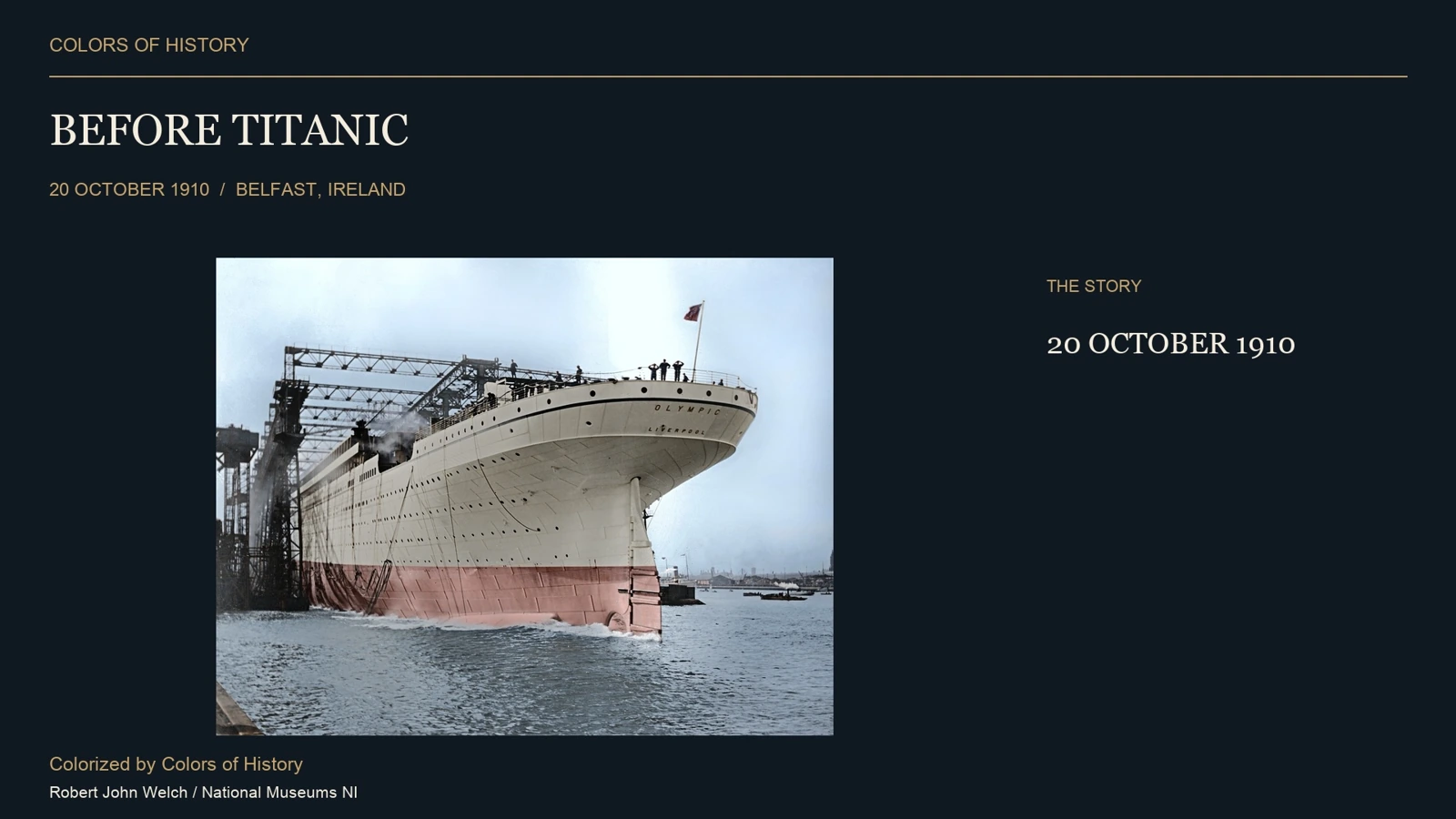
Episode cover: Before Titanic: The Launch of Her Sister Ship
Film story · Episode 7

Before Titanic: The Launch of Her Sister Ship

Robert John Welch’s photograph records Olympic’s launch in Belfast on October 20, 1910. The film follows the work behind the launch and the career of Titanic’s sister ship.

Colorized by Colors of History

Sources and image credits

Original photograph: Robert John Welch / National Museums NI; Olympic launch, October 20, 1910. Public-domain record via Wikimedia Commons; museum provenance retained.

The episode cover is an editorial color interpretation; the original photograph is the historical evidence.
Watch and explore the sources →

Film story · Episode 6

The Doctor and the Editor

Andrea Evangelina Rodríguez Perozo and Petronila Angélica Gómez Brea pursued medicine, education and a platform for women’s voices in the Dominican Republic. The documentary follows their connected work and different paths.

Colorized by Colors of History

Sources and image credits

Colorized by Colors of History. The published film’s source register includes institutional portrait reproductions via the Dominican Constitutional Court and historical Fémina material.

Watch and explore the sources →

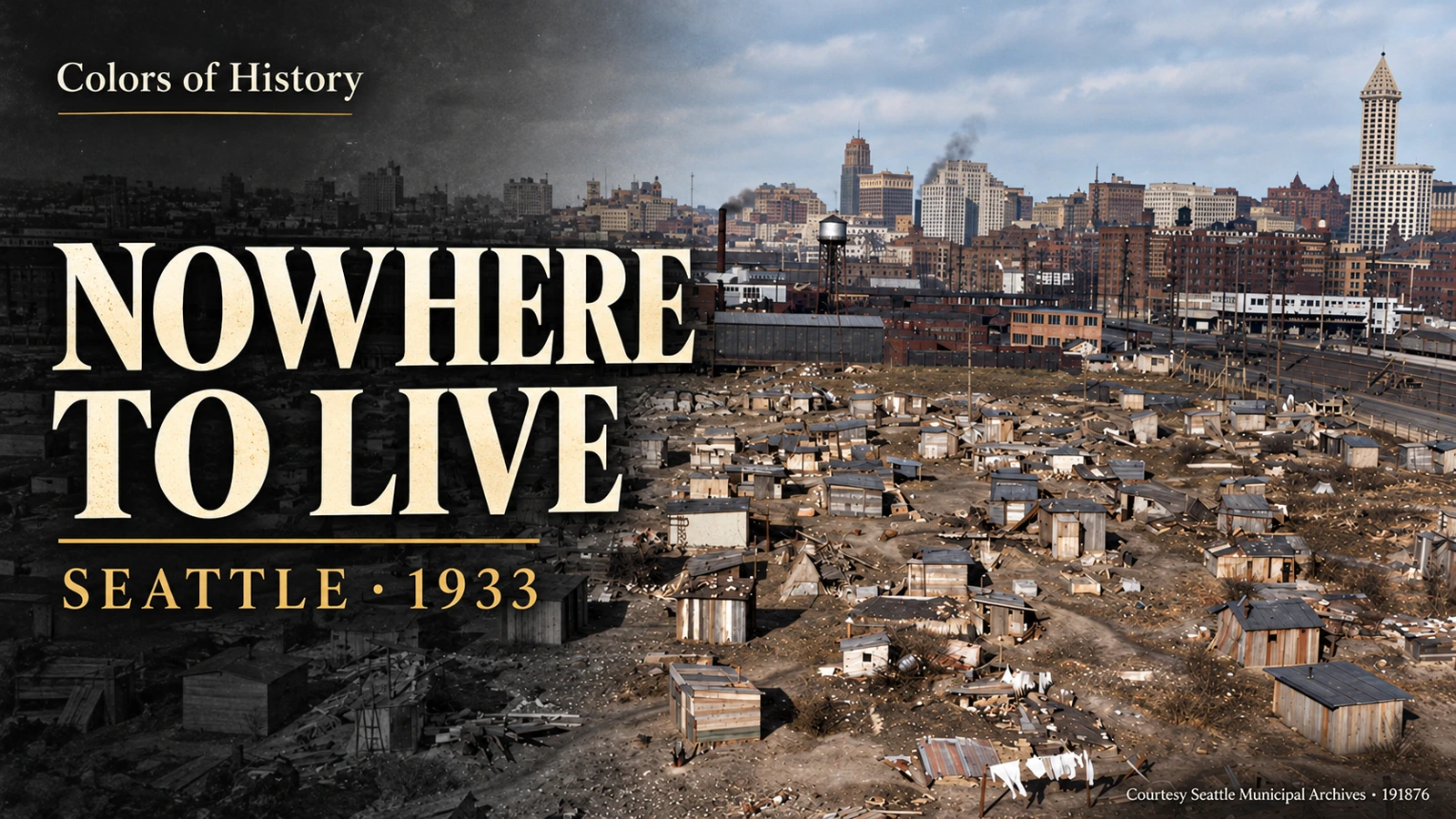
Episode cover: They Built a Town Because They Had Nowhere to Live
Film story · Episode 5

They Built a Town Because They Had Nowhere to Live

Seattle’s Hooverville becomes the starting point for a story about shelter, unemployment and the community people built during the Great Depression.

Colorized by Colors of History

Sources and image credits

Original photograph: Courtesy Seattle Municipal Archives, item 191876, Engineering Department Photographic Negatives, Record Series 2613-07; Seattle, February 7, 1933. CC BY 2.0. The episode cover and color interpretation modify the source; original colors are unknown.

The episode cover is an editorial color interpretation; the original photograph is the historical evidence.
Watch and explore the sources →

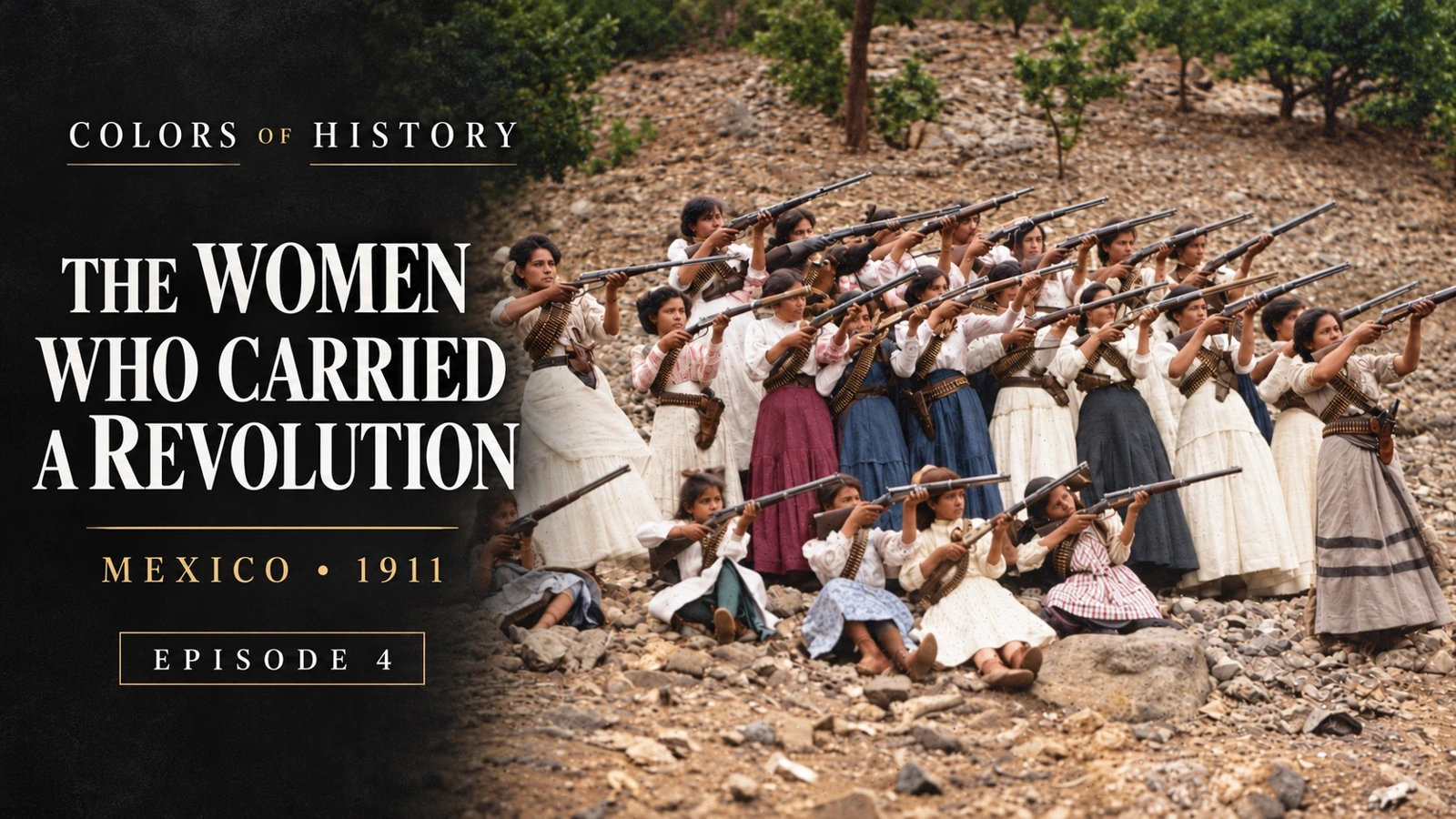
Episode cover: The Women Who Carried a Revolution
Film story · Episode 4

The Women Who Carried a Revolution

A photograph of women and children with rifles and cartridge belts introduces the varied roles of women in the Mexican Revolution. The posed image does not identify its sitters or establish their combat experience.

Colorized by Colors of History

Sources and image credits

Original photograph: photographer unidentified, Library of Congress, LC-DIG-ds-14689 / LC-USZ62-25760, catalog copyright date September 1911. No known restrictions on publication, per the Library of Congress.

The episode cover is an editorial color interpretation; the original photograph is the historical evidence.

Watch and explore the sources →

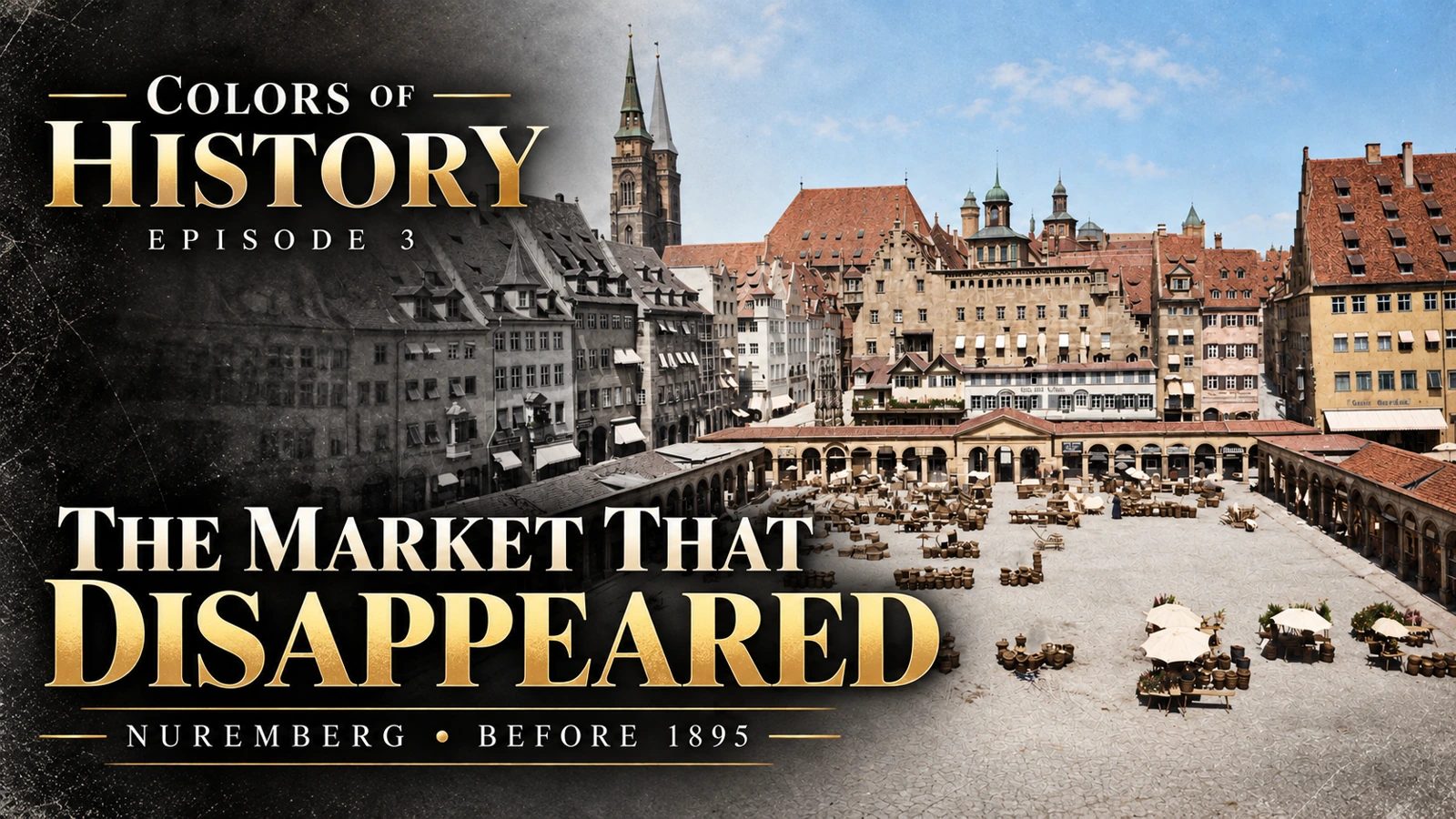
Episode cover: The Nuremberg Market That Disappeared
Film story · Episode 3

The Nuremberg Market That Disappeared

An archival view of the Hauptmarkt opens a story about the market’s vanished colonnades and changing surroundings. The square itself did not disappear.

Colorized by Colors of History

Sources and image credits

Original photograph: photographer unidentified, Library of Congress, catalog 94512776; catalog date between 1860 and 1890. No known restrictions on publication in the United States; use elsewhere may be restricted.

The episode cover is an editorial color interpretation; the original photograph is the historical evidence.
Watch and explore the sources →

Then & Now
Future series
Future format

What happened to this place?

A place-based format connecting archival photographs to their modern landscapes.